



Tutorial: How to establish quality and correctness of classification models? Part 5 – Lift curve
In this part of the tutorial you will learn more about definition and types of lift curves, accumulated LIFT with percentage scale how to construct a LIFT curve. You will gain more information about the accumulated LIFT with percentage scale and other types of LIFT curves.

How to assess quality and correctness of classification models? Part 4 – ROC Curve
The ROC curve is one of the methods for visualizing classification quality, which shows the dependency between TPR (True Positive Rate) and FPR (False Positive Rate).

Tutorial: How to establish quality and correctness of classification models? Part 3 – Confusion Matrix
Confusion Matrix is an N x N matrix, in which rows correspond to correct decision classes and the columns to decisions made by the classifier. The number ni,j at the intersection of i-th row and j-th column is equal to the number of cases from the i-th class which have been classified as belonging to the j-th class.

How to determine the quality and correctness of classification models? Part 2 – Quantitative quality indicators
In this part of tutorial we will discuss derived quality indicators and show how to select the appropriate indicator using as an example churn analysis.

Tutorial: How to determine the quality and correctness of classification models? Part 1 – Introduction
Classification is the process of assigning every object from a collection to exactly one class from a known set of classes.

What is data quality all about and how to run a data cleaning project?
Are you considering carrying out or outsourcing a data cleaning project? Find out what our experience tells us about this types of analyses.

Understanding machine learning #3: Confusion matrix – not all errors are equal
One of the most typical tasks in machine learning is classification tasks. It may seem that evaluating the effectiveness of such a model is easy. Let’s assume that we have a model which, based on historical data, calculates if a client will pay back credit obligations.

Understanding machine learning #2: Do we need machine learning at all?
In the previous post of our Understanding machine learning series, we presented how machines learn through multiple experiences. We also explained how, in some cases, human beings are much better at interpreting data than machines.

Understanding Machine Learning #1 – How machines learn?
“If (there) was one thing all people took for granted, (it) was conviction that if you feed honest figures into a computer, honest figures (will) come out. Never doubted it myself till I met a computer with a sense of humor.” ― Robert A. Heinlein, The Moon is a Harsh Mistress

Analytical Data Marts – data analysts’ indispensable tool
Information about provided services, customers and transactions can be stored in different database systems and data warehouses, depending on the way in which a company operates.
Due to such arrangements, even the simplest analyses or report may require significant expenditures of time, as well as in-depth knowledge about database systems and their availability.
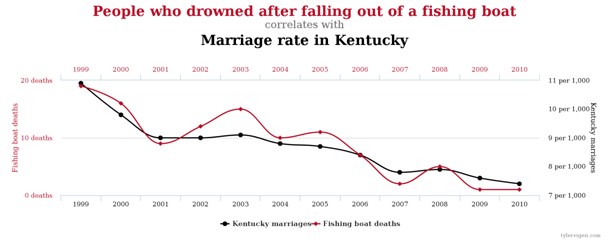
Correlation does not imply causation
A popular phrase tossed around when we talk about statistical data is “there is correlation between variables”. However, many people wrongly consider this to be the equivalent of “there is causation between variables”. It’s important to explain the distinction:

Predictive Analytics glossary
As Predictive Analytics (also called Data Mining or Data Science) is gaining momentum and spreading across companies and sectors, we have created a short guide to some common terms in this field. We hope you like it!